Nafplio
Things to do in Nafplio
Nafplio is Greece’s first capital and it still wears it. The old town is flat, marble-paved and car-free, three fortresses stand over it from three different centuries, and the ancient Argolid sits within an easy drive. It rewards walking more than it rewards ticking things off, so this page is arranged by how you actually get to each thing rather than by rank.
The three fortresses, and why each needs a different plan. They are the town’s defining feature and no two are reached the same way. One you climb from the edge of town, one you walk into from the lanes, and one you can only reach by boat. Deciding which of the three you are doing today is most of the planning a Nafplio day needs.
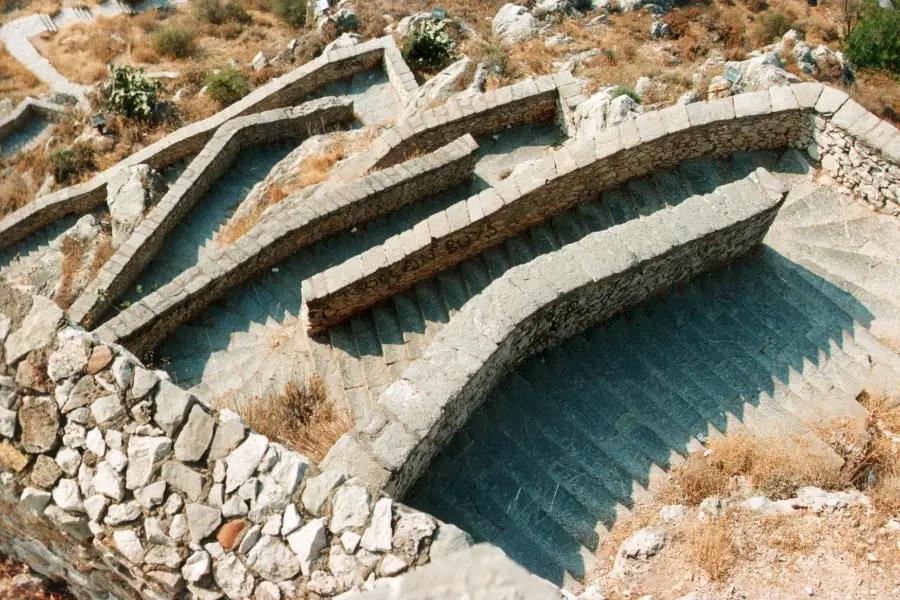
Palamidi, and the climb. Palamidi is the giant on the skyline: a Venetian fortress completed between 1711 and 1714, its eight linked bastions sprawling across a 216-metre hill above the old town, with the whole town, the gulf and the mountains behind laid out from the top. Then the question everybody asks, which is how many steps. Local legend says 999. Guidebooks tend to print figures nearer 850 to 900. The reference works give no count at all, so treat any number you read as folklore rather than fact, this page included. What matters is the climb itself: a long, steep, largely shadeless staircase that punishes anyone who starts it at midday. Go early or late, or drive the road to the top. The site is run by the Ephorate of Antiquities of Argolida, and its hours and ticket change several times across the year, so take the current ones from the Ministry of Culture rather than from any guide.
Acronauplia, the oldest walls and the easiest to reach. Acronauplia is the rocky headland immediately above the old town, crowned by walls that layer pre-classical foundations under Byzantine, Venetian and Ottoman rebuilds. It is the fortified core the town grew out of, and because it sits directly over the lanes you get to it on foot rather than by a long climb or a boat. The payoff is the view straight down over the tiled roofs and out across the Argolic Gulf.
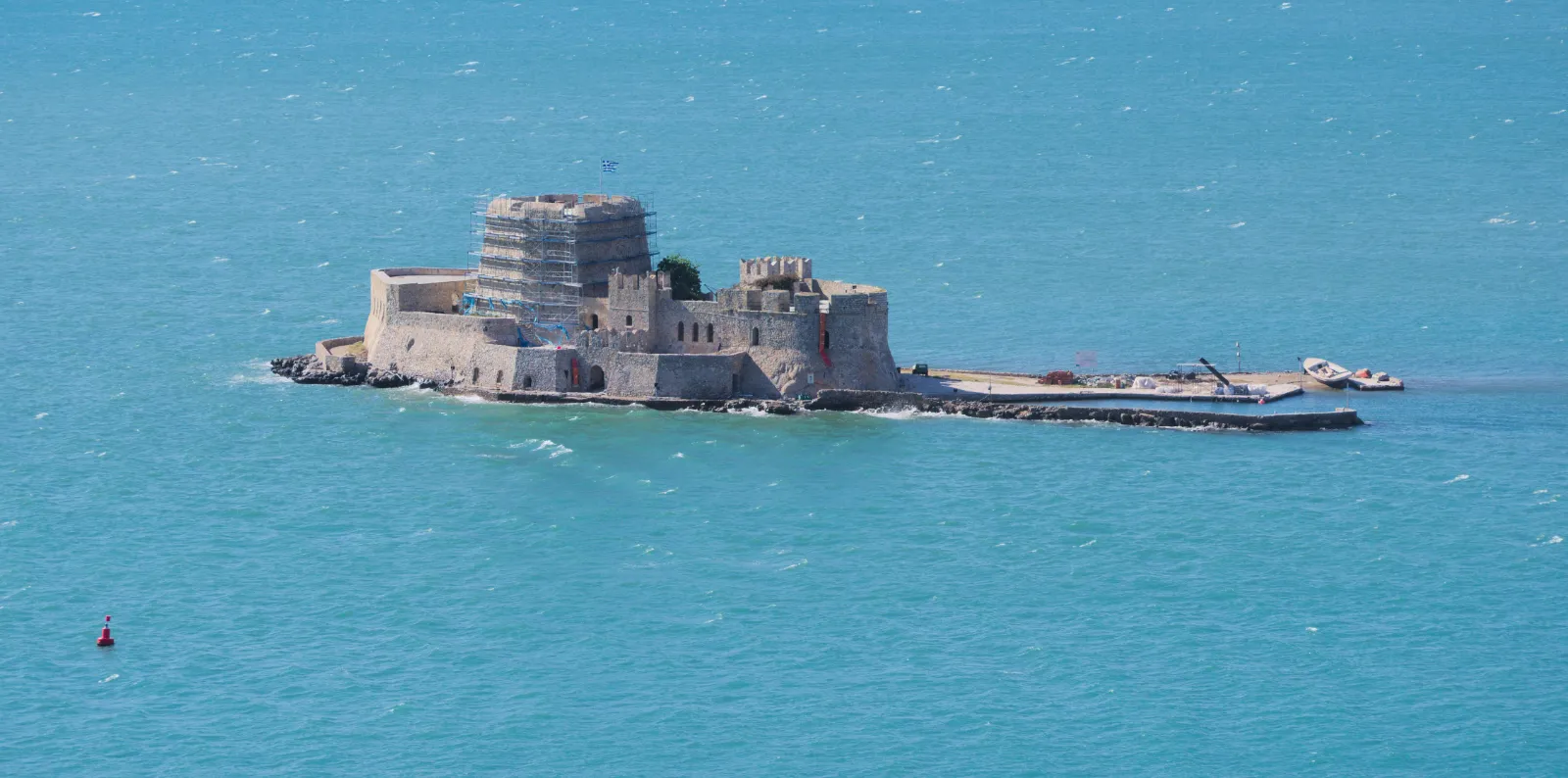
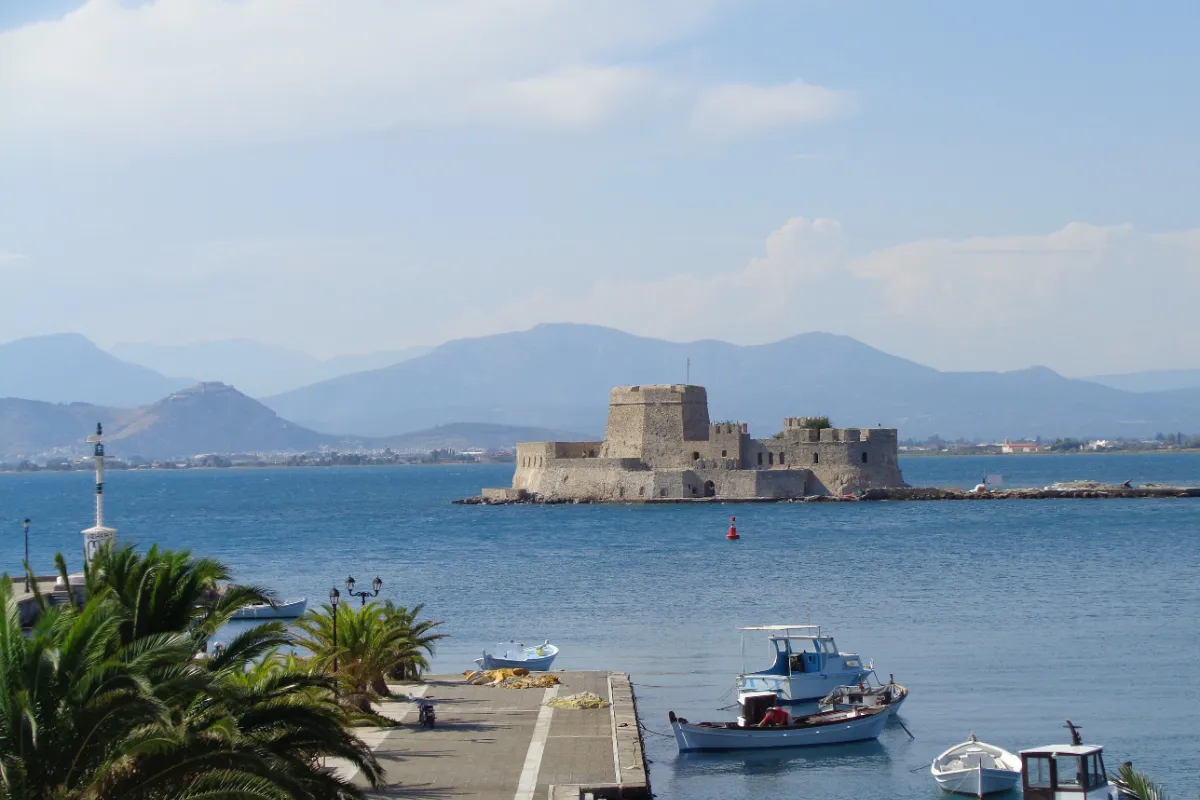
Bourtzi, the fort on the water. The Venetians built Bourtzi in 1473 on a small islet a few hundred metres off the harbour, to guard the entrance to the port. Over the centuries it was a fortress, then a prison, and at one point the residence of the town’s executioner. Today it is the emblem on every postcard of the town, and you visit it on a short boat crossing from the quay that small boats run through the day in season and more sparsely in winter, weather permitting. We name no operator and print no fare or timetable; the crossing is a pattern, not a schedule.
The old town, which is the sight rather than a route between sights. Start at Syntagma Square, the marble-paved centre, with the 1713 Venetian arsenal, now the archaeological museum, closing the far end. Then let the lanes take you: the Psaromachalas quarter climbing the slope behind, the stepped alleys locals call the Dromoskales cutting up toward Acronauplia, the harbour front running out toward the lighthouse. It is flat until you choose to climb and car-free throughout, which is the whole reason it works on foot.
The best thing to do here costs nothing and dates never. The Arvanitia promenade is a flat paved coastal path hugging the base of the Acronauplia rock, running roughly three kilometres from the edge of the old town round to Karathona bay. It is open to the sea the whole way and busy at sunset with locals walking it end to end. Do it in the cool of the day. Arvanitia itself is a small organised pebble beach tucked directly beneath the fortress walls, about ten minutes on foot from Syntagma Square, and Karathona at the far end is the longer sandy bay with room to spread out.
The ancient Argolid, which is why many people are here at all. Nafplio is the comfortable base for the archaeological sites of the plain, and Epidaurus with its theatre is the closest of them. That is the real argument for sleeping here rather than at a site: you get a lived-in town in the evening and the antiquity in the morning. Where to sleep is in where to stay in Nafplio, the town in full is in our Nafplio guide, getting here is in Athens to Nafplio, and the wider loop is the Peloponnese road trip.