Island group
Cyclades (western Cyclades), South Aegean, Greece - the nearest inhabited Cycladic island to Athens
Airport
None. Kea has no airport, so the ferry is the only way on. The nearest airport is Athens (ATH), about 37 km by road from the ferry port at Lavrio, a drive of around forty minutes
Ferry from Lavrio
Roughly three quarters of an hour to a little over an hour by ferry from Lavrio (Lavrion) in Attica - not from Piraeus or Rafina - arriving at Korissia (Livadi), the main port on the northwest coast, about 6 km from the capital Ioulida. Runs daily, with several sailings a day in season
Best months
Late April to June and September to October (warm days, a sea swimmable into autumn, the ancient paths walkable before the summer heat, and the Athenian July-August crush thinned)
Travel details last checked July 2026.
Where Kea is, and why an hour from Athens changes everything
Kea sits at the western edge of the Cyclades, in Greece’s South Aegean, and it is the nearest inhabited Cycladic island to the mainland - roughly an hour by sea from the Attica coast. That closeness, more than any single sight, is what defines it: this is the island Athenians reach for a weekend rather than a fortnight.
Four names give the rest of this page a map. Korissia, also called Livadi, is the ferry port on the northwest coast. Ioulida, written Ioulis and known locally as the Chora, is the hilltop capital about 6 km inland from the port. And Otzias and Vourkari are the two bays that curl along the north coast, the second of them the island’s yacht harbour.
Everything on Kea (Tzia) hangs off that geography. Because it is so near the city, the island never had to become a resort to survive, and because it is a real working island of farms and second homes, it stays quiet in a way its ferry-hub neighbours do not. Understanding where Kea sits in the Cyclades is the first step in planning the trip; the island slots into the wider picture of Greece’s destinations as a short escape rather than a headline holiday.
Kea looks nothing like the Cyclades postcard
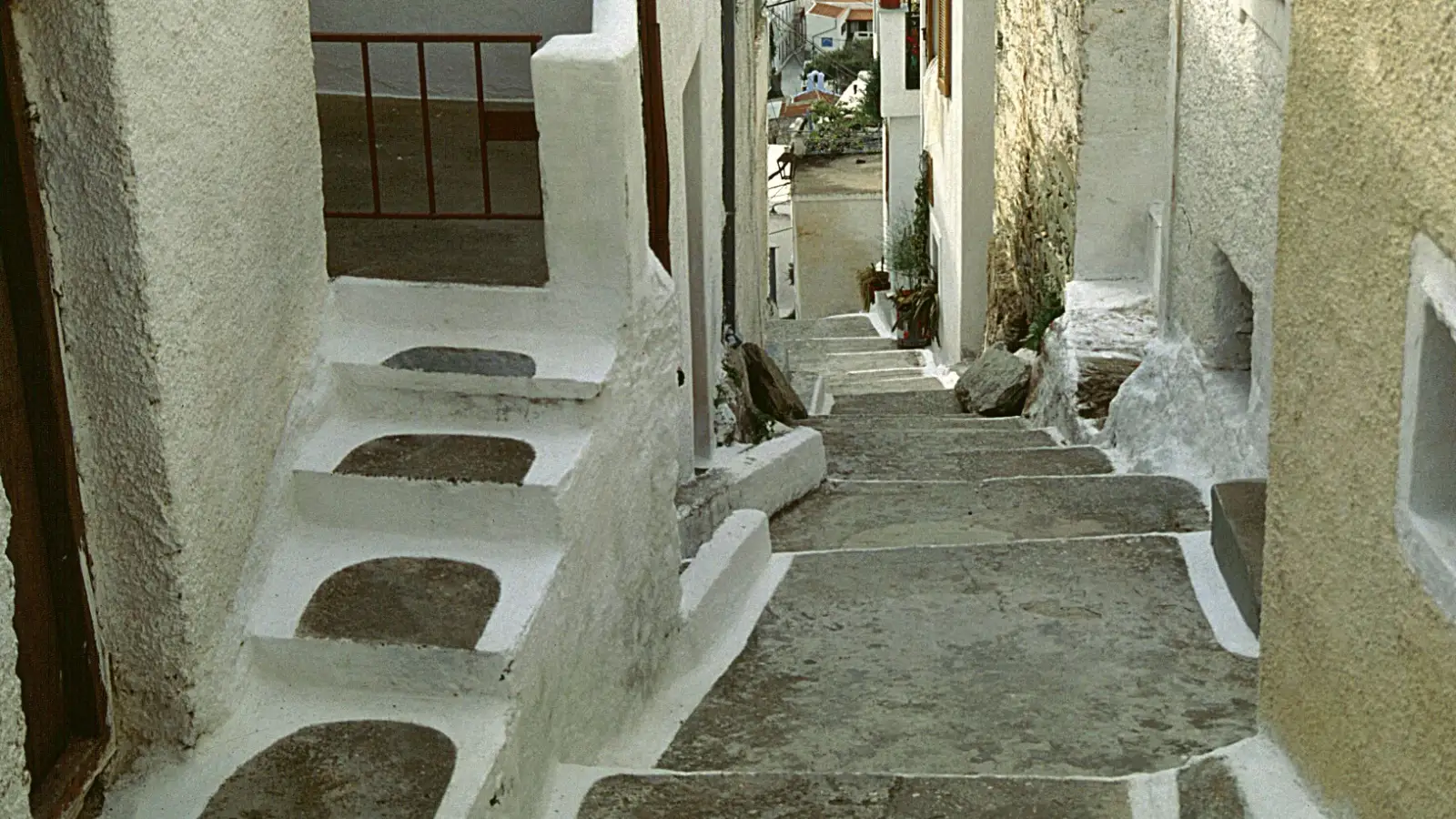
Swap the whitewashed cube and the blue dome for earthy stone, red-tiled roofs and green terraces, and you have the reason Kea feels like a different island group. Its houses are neoclassical and vernacular, built in warm ochre and grey tones with pitched tiled roofs, and in Ioulida the alleys run beneath the stegadia - covered stone galleries that arch overhead and shade the lanes.
The land is greener than most of the Cyclades. Oak woods, terraced hillsides and springs cover much of the interior, a good deal of it protected under Natura 2000, which is why Kea feels lush where Mykonos or Naxos feel dry and bare. This is the island’s real character, and it is worth setting the record straight on one point: most sources describe Kea’s building as earthy stone rather than whitewash, though the official Athens tourism guide calls Ioulida’s lanes “whitewashed”. What is durably true is the tiled roofs, the stone, the stegadia and the greenery, so that is what to expect, without claiming the island is entirely free of white paint.
The texture is quietly upscale rather than showy. Vourkari fills with yachts in summer and the hills hold discreet Athenian second homes, but there is no party strip and no procession of cruise ships. If you want to understand what Kea is known for, it is this: a green, stone-built, low-key island that reads as the opposite of the saturated Aegean cliché. The other walkable, green Cycladic island, Andros, is its closest cousin in character.
Getting there: the ferry from Lavrio, not Piraeus
Kea has no airport, so the ferry is the only way on, and that ferry leaves from Lavrio (Lavrion), a port on the southeast Attica coast - not from Piraeus or Rafina, the usual Cycladic gateways. Lavrio is roughly 60 km from central Athens and about 37 km from Athens Airport, a drive of around forty minutes, reachable by KTEL bus, car or taxi.
The crossing lands at Korissia (Livadi) on Kea’s northwest coast and is short: somewhere between about three quarters of an hour on the fast boats and a little over an hour on the conventional ferry, and the route runs every day, with several sailings a day in season. Check live times and book by date through a ferry aggregator rather than trusting a fixed timetable; the roster of companies on the route shifts from season to season, and in July 2026 it was Goutos Lines, Hellenic Seaways, Karystia and Triton.

Diagram by Greece Trips. Free to reuse with credit - CC BY 4.0.
One honest caveat shapes the whole trip. Lavrio is the only daily link. Every other route off Kea - Kythnos, Syros, Andros, Tinos and the odd boat deeper into the Cyclades - runs once to three days a week, so in practice Kea works as a there-and-back trip from Athens rather than a stepping stone on an island-hopping route. Plan to return the way you came. The wider mechanics of how Greek island ferries work are worth reading first, and which Greek islands have an airport confirms Kea is one that does not; Athens is the city you will pass through either way.
How long to give it, and when to come
A day trip from Athens skims Kea, two to three days is the sweet spot, and a slow week suits walkers and repeat visitors. Here is what each length buys.
- A day trip. Genuinely doable: a morning ferry over, a walk around Ioulida, one hike or one beach, and an evening boat back. It is tight, and it leaves Karthea and the far coves for another time.
- A weekend of two to three nights. The honest sweet spot. Enough for the stone paths, a couple of beaches, the walk to ancient Karthea and an unhurried evening or two.
- A week. For walkers linking the trail network and for anyone who has fallen for the quiet and wants to do very little on purpose.
On timing, late April to June and September to October are the pick: warm days, a sea still swimmable into autumn, the ancient paths comfortable to walk before or after the fiercest heat, and thinner crowds. July and August are hot, which makes the middle of the day poor for hiking, and busy, when Athenians pack the island and extra ferries run to carry them. Winter is green and quiet, though many rooms, tavernas and services close for the season, even as the island stays reachable from the mainland.
For the reasoning behind those windows across the country, see the best time to visit Greece and the case for shoulder-season travel in Greece. If a single day is all you have, Kea also earns its place among day trips from Athens.
Walking the old stone paths - Kea’s real draw
Kea’s signature is not a beach but a footpath. The Municipality of Kea puts the island’s footpath network at about 81 km over 12 marked routes - stone-paved ways that once linked its four ancient city-states and now run through oak woods, terraces, chapels and monasteries down to remote coves.
Two walks give you the shape of it. The Korissia-Ioulida-Otzias loop is the classic taste, tying the port, the capital and a north-coast bay into one manageable day. The Ioulida-to-Karthea route is the big one, dropping across the island to the ancient site on the far coast (more on that below).
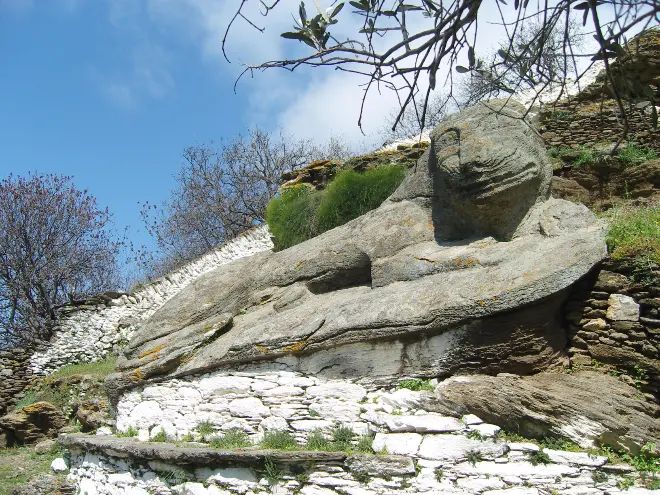
The Lion of Kea, the Liontas, is the landmark most walkers aim for first. It is a large lion carved directly into the island’s bedrock, dated to around the 6th century BC and wearing the faint “archaic smile” of its period, reached on a short waymarked path just below Ioulida. Walk the paths in spring or autumn rather than at high-summer midday, and carry water, because some stretches give little shade. There is no separate hiking guide to route you onward here, so this is the island’s walking in full; for the vehicle question that the spread-out trailheads raise, see which Greek islands you need a car for.
Ancient Karthea and a surprisingly deep past
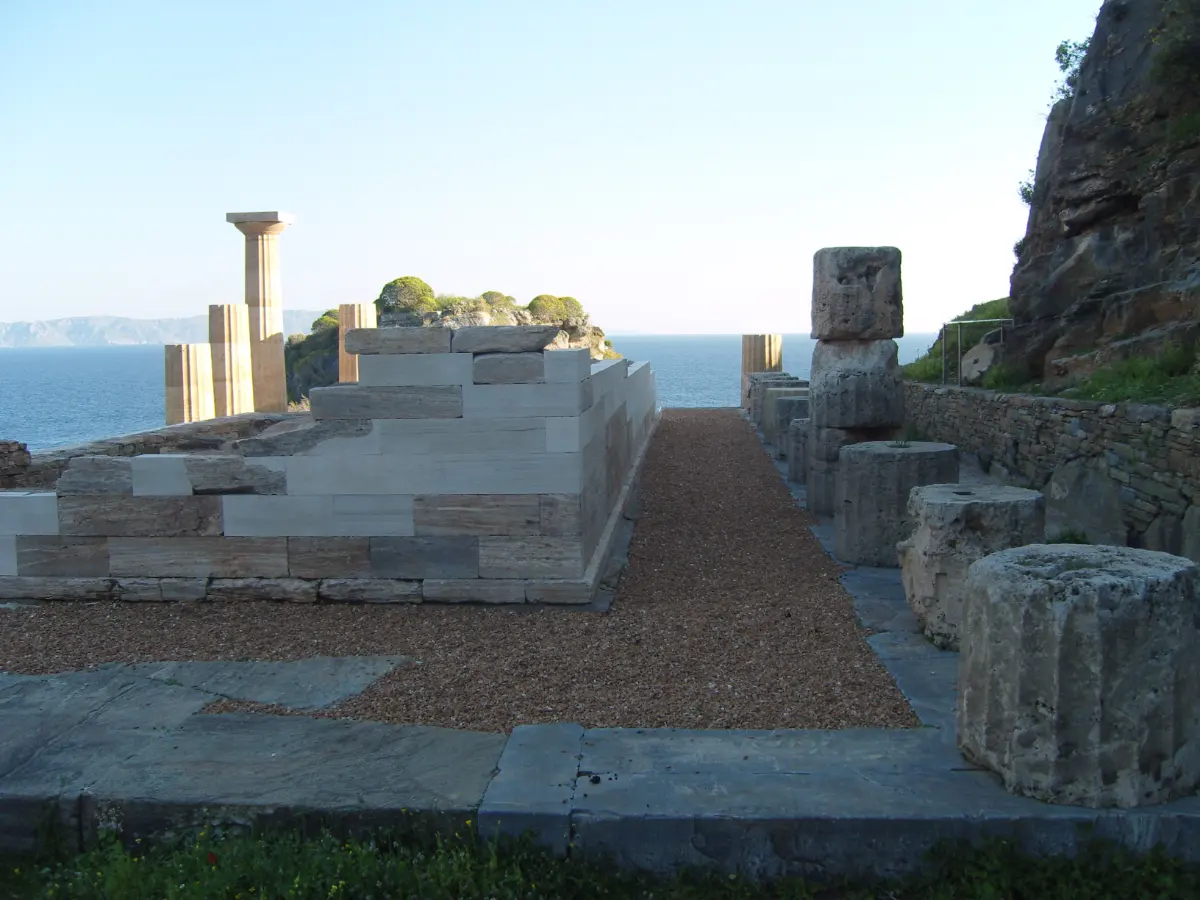
Karthea is the payoff at the end of a walk. Ancient Karthea (Karthaia) was the most important of Kea’s four city-states, and its ruins - a Doric temple to Athena, an Apollo sanctuary and a stone theatre - stand on the remote southeastern coast above an empty bay. There is no road to the door: you arrive on foot on the signed paths that drop down from the Kato Meria side of the island - the municipality points walkers in from Ellinika and from Chimoniki - or you come by boat. Treat it as a proper walk in and back, so time it, carry water and start early.
The island’s past runs deeper than one site. The settlement at Agia Irini, near Vourkari, was lived in from the final Neolithic period through the end of the Bronze Age and was walled in the Middle Bronze Age with towers and a central gate; the Archaeological Museum in Ioulida holds its finds, including the Middle Cycladic clay female figurines in their bell-shaped skirts. The Monastery of Panagia Kastriani stands on a cliff on the northeast coast. The culture ministry runs the museum on separate winter and summer hours with a fixed weekly closing day, so check its current listing before you build a day around it.
Beaches: the ones you drive to, and the ones you walk or sail to
Kea’s coast splits cleanly into two kinds of beach, and sorting them by access rather than looks is the useful way to plan. Near the port and along the north coast sit the paved-road bays. Otzias is the island’s longest beach, a curve of roughly 700 metres that the municipality describes as partly organised, with salt cedars for shade and tavernas behind the sand; Gialiskari is the small, busy one nearby, shaded by salt cedars and eucalyptus; Koundouros, about 16 km south of Ioulida, is the most developed of them, an organised sandy beach with sunbeds that doubles as an anchorage; and Pisses on the west coast is fully organised, with sunbeds, shade trees and places to eat close by. These are the easy days.
The other kind you earn, though less dramatically than the maps suggest. Spathi is reached by turning off the asphalt and crossing a stretch of the interior, and Sykamia by a short unpaved run at the end; both have trees for shade, and Spathi has a taverna-beach bar, while at Sykamia you bring your own supplies. The beach below Karthea is the genuinely remote one, on foot or by boat only.
The planning conclusion writes itself. Because the port, the capital and the best beaches are spread out and some sit off the paved network, you will want a car for more than a day trip, or a boat day for the wildest coves. Getting around Greece covers the rental and transport basics that apply here.
The wreck coast: diving the Britannic and its neighbours
Kea’s seabed is a graveyard of famous ships, which makes it one of Greece’s serious dive destinations - though the headline wreck is for experts only. The waters off the island hold the HMHS Britannic, the near-identical sister ship of the Titanic, which sank in 1916 and lies deep offshore; the Junkers Ju 52 aircraft; and the steamship Burdigala.
Be clear about what that means in practice. The Britannic is a deep technical dive: the depths reported for the wreck run to around 120 m, well beyond recreational limits, and dive accounts describe it as permit-controlled and open only to divers with technical certification working through licensed Greek operators - so most visitors read the story rather than descend to it. Dive centres based around Korissia run accessible reef and shallower dives for ordinary divers, so the coast is not off-limits to anyone without tech gear. Think of the Britannic as history and context, a genuine hook for the island, rather than something to book on a whim.
Eating on Kea: loza, paspalas and almond sweets
Kea’s table is quiet-Cyclades farm-and-sea, and the products are the durable part worth knowing. Loza is the island’s Aegean cured pork, a local prosciutto; paspalas is pork cooked down with tomato, egg and cheese; and amygdalota are the almond sweets you finish a meal with. Add local cheeses, thyme honey, dried tomatoes and island wine, and you have the shape of a Kea menu.
Point yourself at areas rather than named rooms. Vourkari’s waterfront is where the island eats seafood and watches the yachts; the tavernas of Ioulida and the port at Korissia handle everyday meals. This page names no restaurant on purpose, because rooms rebrand and close between seasons while the harbour and the products do not. For the wider context of what you will be ordering, see Greek food and drink.
Who Kea suits, and who should skip it
Come to Kea for a quiet, green, walkable weekend near Athens. It fits Athens-based or Athens-arriving travellers who want a low-effort escape, hikers drawn to the stone paths, quiet-seekers after the Cyclades without the crowds, divers curious about the wreck coast, and couples or families after calm rather than a scene.
Skip it if your image of a Greek island is nightlife and a busy bar strip, because Kea does not run one. Skip it, too, if you are chasing the whitewashed-and-blue-domed postcard, because that is a different set of islands and Kea is honestly not it. And skip it as an island-hopping base: the sparse onward ferries make it a there-and-back from Athens rather than a link in a chain.
If that fit is not quite yours, the wider Cyclades hold the alternatives - Mykonos for the opposite kind of island entirely, and a planned Cyclades island-hopping route for travellers who want to keep moving. Pick your dates, decide between a day, a weekend or a week, and the rest of Kea arranges itself around the ferry from Lavrio.
Kea FAQ
Where is Kea (Tzia) and how far is it from Athens?
Kea, also called Tzia, is a Cyclades island at the western edge of the group and the nearest inhabited Cycladic island to mainland Athens. You reach it by ferry from Lavrio in southeast Attica in roughly three quarters of an hour to a little over an hour - there is no flying, because Kea has no airport. Lavrio itself is about 60 km from central Athens and about 37 km from the airport. More on the island group at the Cyclades.
How do you get to Kea from Athens?
Take a ferry from Lavrio (Lavrion) port, not Piraeus or Rafina. Lavrio is about 60 km from central Athens and about 37 km from the airport, reachable by KTEL bus, car or taxi. The crossing to Korissia on Kea runs about three quarters of an hour to a little over an hour, daily and several times a day in season. The mechanics are in Greek island ferries, and Athens is the gateway city.
How many days do you need in Kea?
A day trip from Athens works but only skims the island - Ioulida, one short hike and a beach. Two to three days is the sweet spot: time for the stone paths, a couple of beaches and the walk to ancient Karthea. Walkers and repeat visitors happily stay a week. Slot it into day trips from Athens if a day is all you have.
Is Kea worth visiting?
Yes, if you want a quiet, green, walkable Cyclades island an hour from Athens rather than a postcard party island. Kea trades whitewashed domes and nightlife for earthy stone villages, about 81 km of ancient footpaths, calm beaches and a famous wreck-diving coast. Skip it if you want Mykonos; weigh it against all our Greece destinations.
What is the best time to visit Kea?
Late April to June and September to October are the pick - warm days, a sea still swimmable in autumn, the ancient paths comfortable to walk, and thinner crowds than the July-August peak, when Athenians pack the island and the heat makes hiking hard. Winter is quiet, with many closures. The country-wide picture is in the best time to visit Greece.
Can you visit Kea as a day trip from Athens?
Yes. With a short morning ferry from Lavrio you can walk Ioulida, see the Lion, fit in a short hike or a beach, and catch an evening boat back the same day. It is tight but genuinely doable, which is exactly why Athenians treat Kea as a weekend and day escape. See day trips from Athens for how it fits a city stay.
Do you need a car in Kea?
For more than a day trip, effectively yes. The ferry port, the hilltop capital and the best beaches are spread out and some sit on dirt tracks, so a rental car or scooter makes the island open up. Ioulida itself is largely car-free, about 6 km from the port, so you park and walk in. The wider question is covered in which Greek islands need a car.
Plan by category
The Kea guides
2 guides, each scoped to a decision you actually have to make.
 Attractions
Things to do
See the attractions →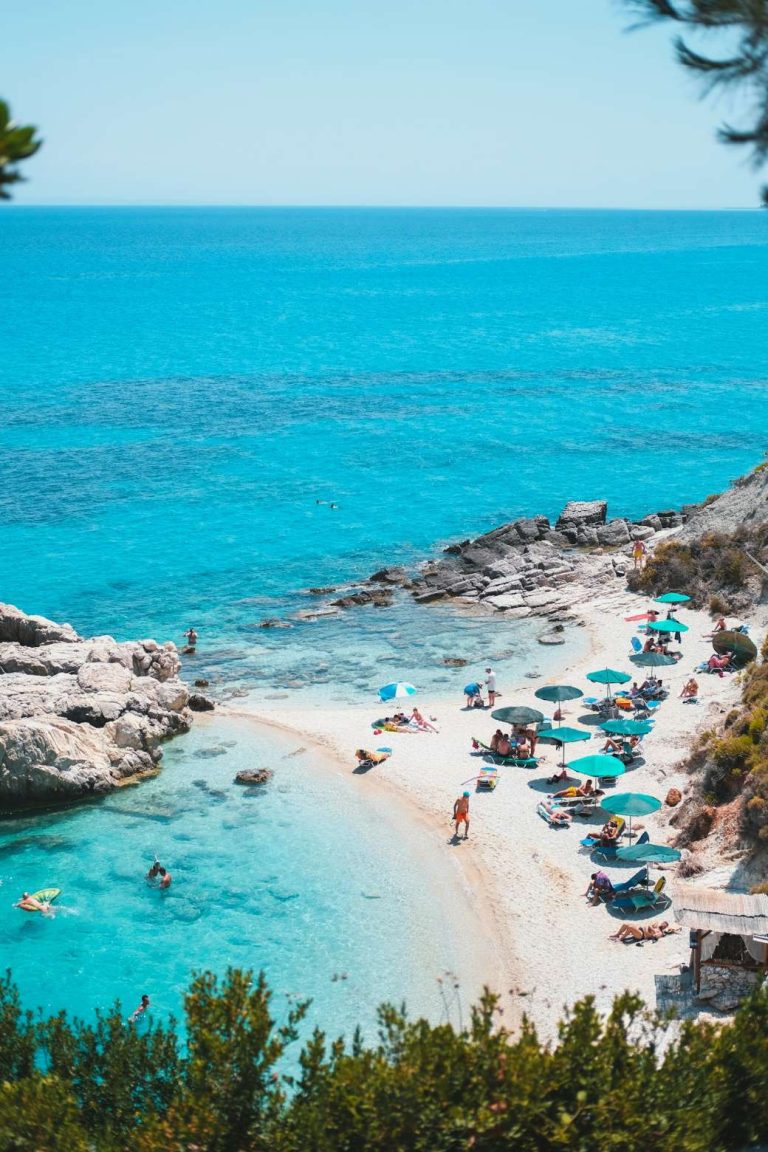 Beaches
The beaches
See the beaches →
Booking
We sell nothing and book nothing for you. Every guide on this page tells you how to arrange each piece yourself - which ferry operator, when to book, what to prebook and what to leave loose.