Mount Athos is the strangest place in Greece: a self-governing monastic state on the easternmost of the three Halkidiki peninsulas, with its own border, its own government and, in practice, its own calendar.

Diagram by Greece Trips. Free to reuse with credit - CC BY 4.0.
What it actually is
The Athonite peninsula has been monastic land for more than a thousand years. It is part of Greece, and it is autonomous: the Holy Community at Karyes governs it, entry is controlled, and the Greek state maintains a civil governor there but does not administer it as ordinary territory.
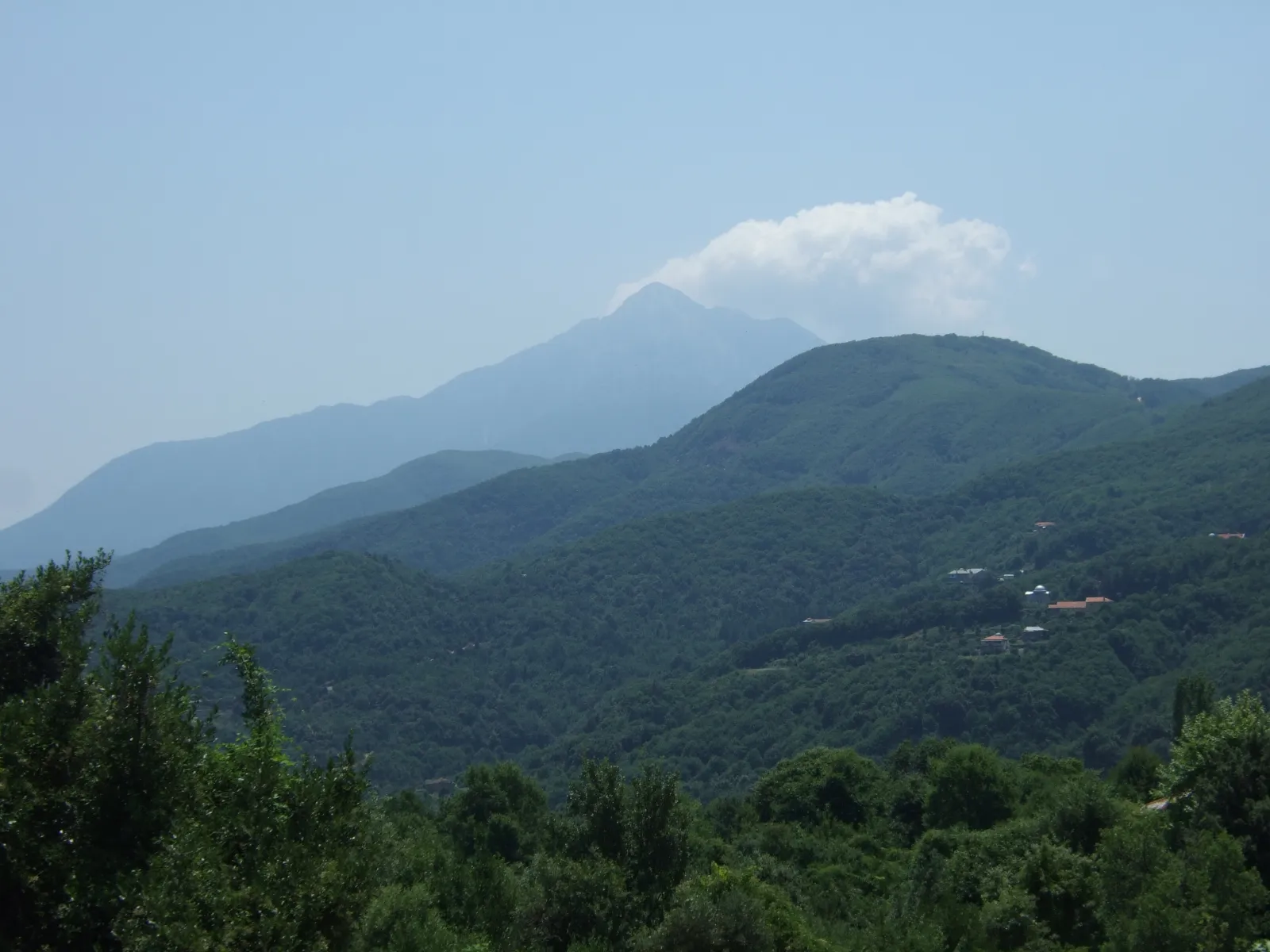
There are twenty ruling monasteries, plus sketes, cells and hermitages scattered across the peninsula and clinging to the cliffs at its southern end, under the 2,033-metre marble pyramid of Mount Athos itself.
Most monasteries are Greek; Hilandar is Serbian, Zograf Bulgarian and St Panteleimon Russian, which makes Athos the shared centre of Orthodox monasticism rather than a Greek one.
Many houses keep the Julian calendar and Byzantine hours, where the day starts at sunset. This is not for show. It is simply how time is kept.
The access rules, stated plainly
- Only men may enter. The prohibition on women, the avaton, has been in force for over a thousand years and is written into Greek law. It applies to female animals too, with working exceptions.
- Every male visitor needs a permit, the diamonitirion, issued in limited numbers per day, with a smaller quota for non-Orthodox visitors. It is applied for in advance through the Pilgrims’ Bureau in Thessaloniki.
- Boats leave from Ouranoupoli, the last town before the border, and from Ierissos on the other coast.
- You stay in the monasteries, which offer hospitality: a bed, and meals taken with the community. It is a pilgrimage, not a hotel stay.
- Photography and filming are restricted, and video is generally not permitted.
What everyone else can do
The boat cruise. Vessels sail from Ouranoupoli along the coast, staying outside the 500-metre exclusion line, and this is how the great majority of visitors, women included, see Athos.
From the water you get the thing the peninsula is famous for: monasteries the size of fortresses rising straight out of the sea, towers, arsanades and balconied wooden wings hung over the rock. It is a half-day trip and the single best excursion in northern Greece.
The cruise runs in season from Ouranoupoli, about two hours from Thessaloniki by road.
Where it fits
- Thessaloniki is the base, and the Pilgrims’ Bureau is there.
- Sithonia is the middle peninsula, the beach one, an hour west.
- Vergina and the Macedonian tombs are a day inland.
Athos is a UNESCO World Heritage site, listed for both its culture and its natural setting, and one of the very few mixed sites in Greece.
Last checked August 2026. Permit quotas and boat schedules change - see our editorial policy.
Common questions
Can women visit Mount Athos?
Not on land. The avaton has barred women for over a thousand years and is written into Greek law. Women see Athos from the boat cruises along the coast.
What is a diamonitirion?
The entry permit every male visitor needs, issued in limited daily numbers through the Pilgrims’ Bureau in Thessaloniki, with a smaller quota for non-Orthodox visitors.
How many monasteries are on Mount Athos?
Twenty ruling monasteries, plus sketes, cells and hermitages, including Serbian, Bulgarian and Russian houses alongside the Greek ones.
How do you see Mount Athos without a permit?
By boat from Ouranoupoli. Cruises run along the coast outside the exclusion line and show the monasteries from the sea, which is how most visitors see them.
Where is Mount Athos?
On the easternmost of the three Halkidiki peninsulas in northern Greece, about two hours by road from Thessaloniki.
Next
Read Thessaloniki, Sithonia, or the UNESCO sites of Greece.