
Diagram by Greece Trips. Free to reuse with credit - CC BY 4.0.
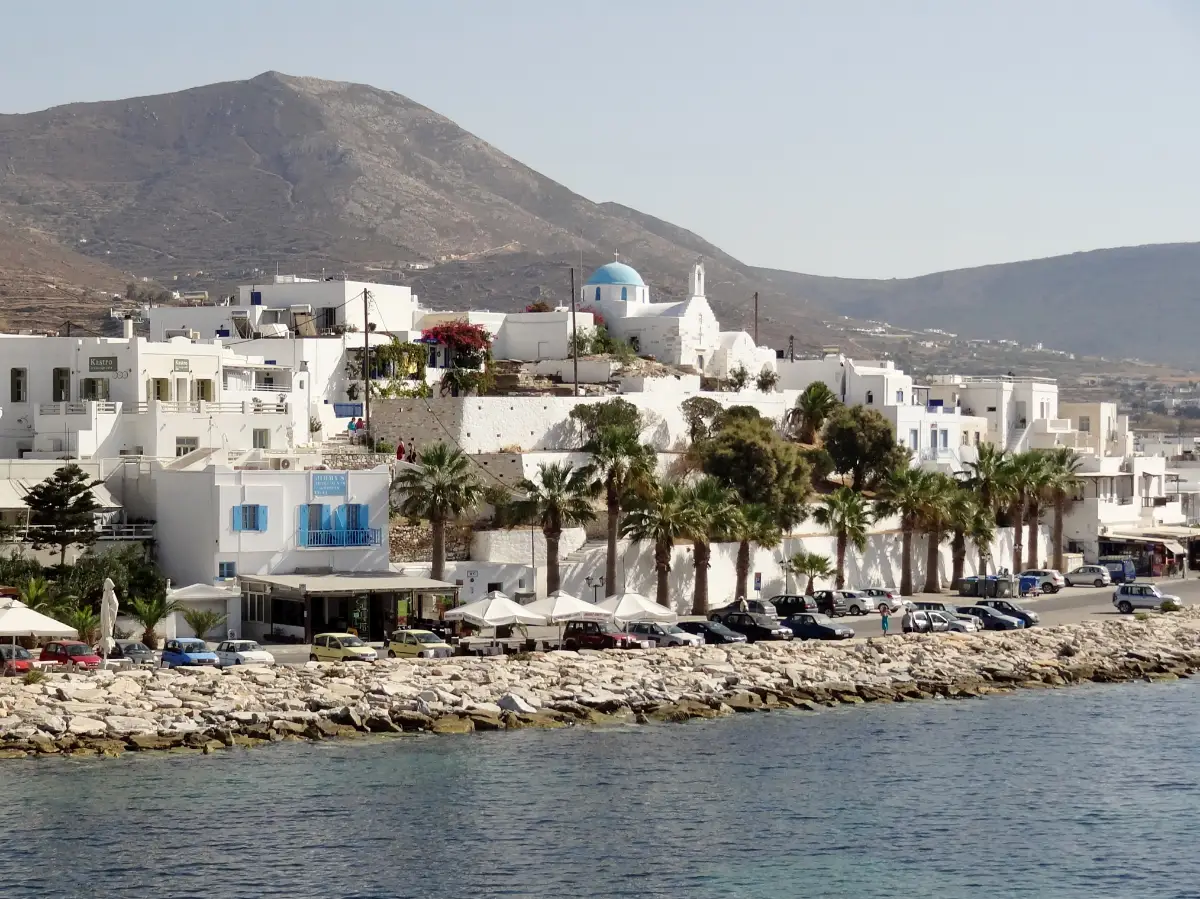
Parikia is the island’s capital and its main port. The waterfront is what a ferry passenger sees: a working quay, a strip of cafes, and the traffic of a port town. The old town starts one street back.
Behind the waterfront
The lanes inland are the reason to stay. They are narrow, paved, whitewashed, and largely free of cars, and they wind rather than run straight, which is old defensive habit rather than charm.
- The Kastro. A Venetian fortress built in the thirteenth century out of whatever was to hand, which on Paros meant a classical temple. Columns and marble blocks are set sideways into the wall, still recognisably column-shaped. It is the most direct piece of layered history on the island.
- The lanes of the old town, with the usual shops but also ordinary houses, and a scale that makes an evening walk a real one rather than a lap.
- The windmill on the harbour front, which is the town’s landmark and the standard meeting point.
- Panagia Ekatontapiliani, the Church of a Hundred Doors, set back from the port in its own walled courtyard. It is one of the oldest churches still in use in Greece and has its own page here, because it deserves one.
Why it gets skipped, and why that is a mistake
Naoussa is prettier at first glance and has the better-known dinner scene. Parikia carries the port, and a port always looks less composed than a fishing village that has been polished.
But Parikia has the archaeology, the older church, the bigger old town and, for most of the year, the more ordinary life. It also has the buses: the island network runs out of Parikia, so a day without a car starts here whether you slept here or not.
Practical notes
- The ferry quay is a short walk from the old town, which makes Parikia the easy base for anyone island-hopping rather than settling. Our Greek island ferries guide covers how the routes fit together.
- The waterfront is a road. Traffic and luggage share it in season, and the pleasant part starts once you turn inland.
- The old town is paved and mostly flat, which is not true of the hill villages inland.
- Buses to Naoussa, Lefkes and the beaches leave from the station by the port.
Last checked August 2026. Bus routes and seasonal services change - see our editorial policy.
Common questions
What is Parikia?
The capital and main ferry port of Paros, with an old town of marble lanes behind the waterfront, a Venetian kastro built from a classical temple, and the Ekatontapiliani church.
Is it worth staying in Parikia rather than Naoussa?
It depends what you want. Parikia has the ferries, the buses, the archaeology and a larger old town; Naoussa has the harbour looks and the better-known evening scene.
What is the Kastro in Parikia?
A thirteenth-century Venetian fortress built out of the marble of an earlier temple, with classical columns visible set into the walls.
How long do you need in Parikia?
An evening walk covers the old town. Half a day takes in the Kastro, the church and the museum area at a normal pace.
Is Parikia walkable from the ferry?
Yes. The quay sits at one end of the town and the old town begins a street back from the waterfront.
Next
Read things to do in Paros, Ekatontapiliani, or where to stay in Paros.