The short answer
Buy things Greece actually makes: olive oil, honey and herbs, mastic from Chios, leather, ceramics, and drink you cannot get at home. Skip anything moulded in resin with a fake patina.
And know one rule before you buy anything old: taking genuine antiquities out of Greece without a permit is a serious criminal offence, not a customs technicality. That is the section at the bottom of this page and it is the reason the page exists.
What is genuinely Greek

Olive oil. The obvious one, and still the right one. Buy extra virgin, buy it from a producer or a proper food shop rather than an airport gift aisle, and check your airline’s liquid rules before you fill a suitcase. Kalamata and Crete are the names you will see most.
Mastic, from Chios. The most specific thing on this list. Mastic - mastiha - is the resin of mastic trees grown on the south of Chios, and it is a protected designation of origin product that is not produced anywhere else in the world. It turns up as crystals to chew, as a liqueur, as ouzo, as chewing gum, as cosmetics and as a flavouring in sweets. If you want a souvenir nobody else will have, this is it.
Honey and herbs. Greek thyme honey is dense and strong, and mountain tea (tsai tou vounou), dried oregano and wild sage all travel well and cost little.
Drink. Ouzo, tsipouro, raki, and the wines you cannot easily buy at home - Santorini’s Assyrtiko above all, grown in low basket-woven vines that are worth seeing in person. Check duty allowances for your own country before you load up.
Leather. Sandals in particular, and there is a long tradition of making them to fit while you wait, especially in Athens.
Ceramics and marble. Bought from a workshop rather than a souvenir rack, these are real crafts. Naxos and Tinos have marble traditions that go back millennia and are still working.
Worry beads (komboloi). Genuinely part of daily life rather than a tourist invention. The good ones are amber, horn or bone and are sold by specialists.
What to skip
Resin statuettes of columns and gods, “ancient” coins on market tables, mass-produced evil-eye trinkets, and anything sold in the shadow of a major archaeological site at a price that suggests it was moulded in bulk. None of it is made in Greece in any meaningful sense.
The evil eye itself (mati) is a real and living superstition, so a good glass one from a jeweller is a fine thing to bring home. It is the plastic version that is not.
🔴 The one purchase that can go seriously wrong
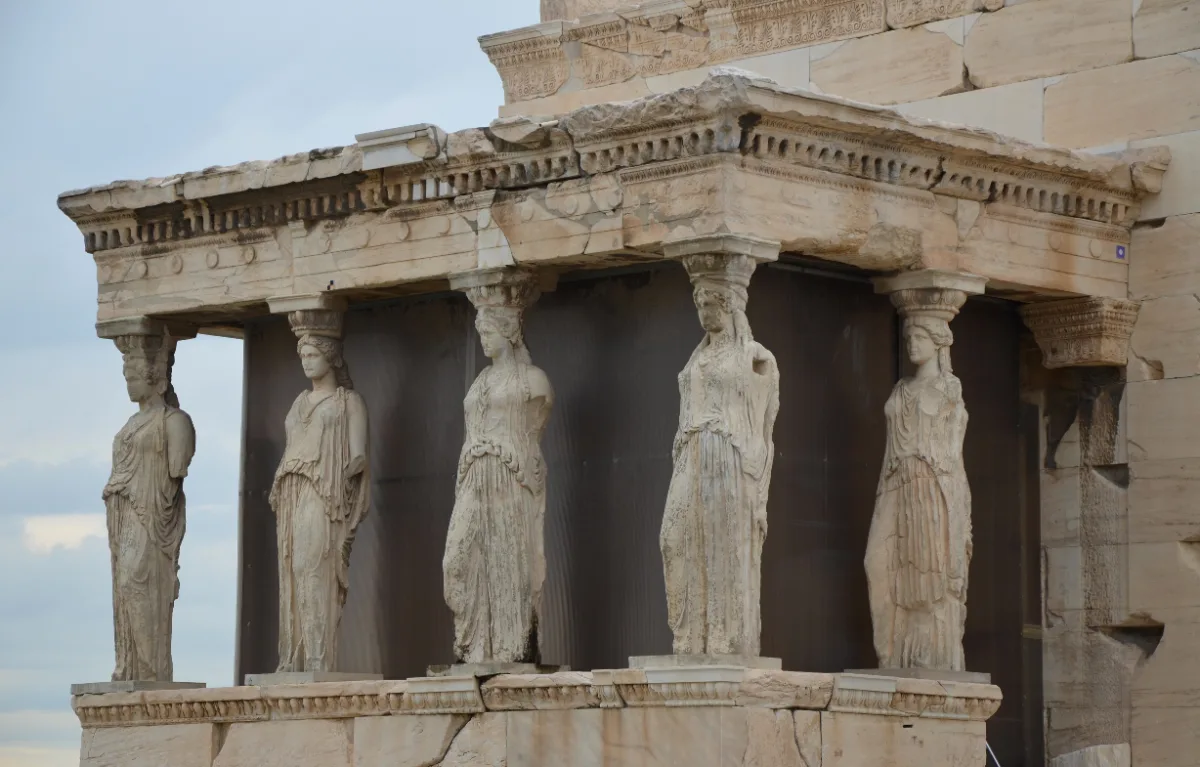
This is the part most souvenir articles leave out, and it is the only part that can turn a holiday into a court case.
Genuine antiquities cannot be taken out of Greece without authorisation. Greek heritage law restricts the export of cultural property made before 1830, along with anything recovered from excavations or removed from monuments. Private export requires documentation certifying purchase from a licensed dealer. An attempted illegal export is punishable by up to ten years’ imprisonment.
What that means in practice for an ordinary visitor:
- The interesting old coin on a market table is the problem purchase. Either it is fake, in which case you have wasted your money, or it is real, in which case taking it home is the offence.
- If you buy a genuine antique, buy it from a licensed dealer and keep the paperwork. That documentation is the thing that makes the export lawful.
- Do not pick up “just a bit of stone” at an archaeological site. Removing material from a monument is squarely inside what the law covers.
- This is a description of the mechanism, not legal advice. If you are buying something genuinely old and valuable, the dealer and the Greek authorities are the people to ask, not a travel website.
The reason to know this is not fear. It is that the rule exists for an excellent reason - Greece spent two centuries watching its heritage leave in other people’s luggage - and a visitor who understands that buys better souvenirs anyway.
Practical notes
- Cash still matters in small shops and markets, though cards are widely accepted. See money in Greece.
- Bargaining is not really a thing in Greek shops the way it is further east. Politely asking about a price on a larger craft purchase is fine; haggling over a jar of honey is not.
- Liquids and your luggage. Olive oil, honey and spirits are all liquids, all heavy, and all subject to hand-luggage rules. Plan for hold baggage or buy at the airport.
- Sunday and siesta closing catch people out. See siesta and opening hours.
Frequently asked questions
What should I buy in Greece?
Olive oil, honey and herbs, mastic from Chios, leather sandals, ceramics or marble from a workshop, worry beads, and drink you cannot get at home - ouzo, tsipouro, and Santorini’s Assyrtiko wine.
What is mastic and why is it a good souvenir?
Mastic (mastiha) is the resin of mastic trees grown on southern Chios. It is a protected designation of origin product made nowhere else in the world, and it comes as crystals, liqueur, gum, sweets and cosmetics.
Can I take antiquities home from Greece?
Not without authorisation. Greek law restricts the export of cultural property made before 1830 and anything from excavations or monuments, private export requires documents certifying purchase from a licensed dealer, and attempted illegal export carries up to ten years’ imprisonment.
Are the “ancient coins” sold at markets real?
Either they are not, or taking them out of the country is an offence. Neither outcome is a good souvenir.
Can I bring olive oil and ouzo home in my luggage?
They are liquids, so hold baggage or an airport purchase, and check your own country’s duty allowances for alcohol.
Do people haggle in Greek shops?
Not generally. Asking about the price of a larger craft item is acceptable; haggling over food or small goods is not the local practice.
Next
Read Greek food and drink for what to eat and bring home, money in Greece for cards and cash, or Chios if the mastic sold you on the island it comes from.