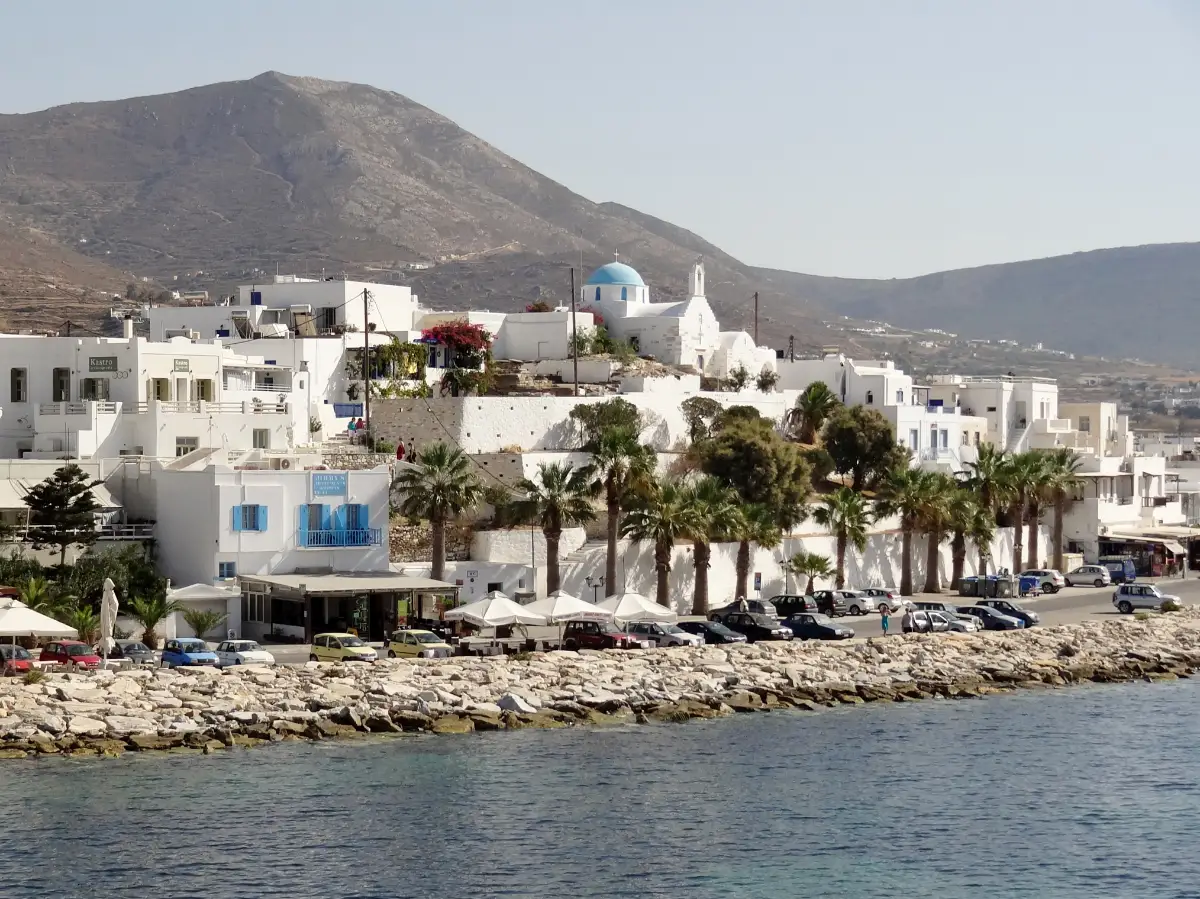
The short answer
From Piraeus, the crossing runs about 2h40 at the fast end, roughly 4h10 on a Blue Star conventional ferry, and up to about 5h10 on the slowest published services. Paros also has a small airport, PAS, roughly 40 to 45 minutes from Athens.
What makes this route worth its own page is not the crossing. It is that Paros is the crossroads of the Cyclades - more boats call here than almost anywhere in the group, which makes it the most forgiving island to base an island-hopping trip on.
Sail if you are doing anything more than a single-island trip. Fly if you are going straight there and straight back on a short trip.
Athens to Paros at a glance
Why Paros is the sane base
| What you’re deciding | By ferry | By plane |
|---|---|---|
| Journey time | ~2h40 fast, ~4h10 conventional, up to ~5h10 | ~40–45 min in the air |
| Leaves from | Piraeus mainly; Rafina seasonally | Athens airport (ATH) |
| Carries a car | Conventional ferries | No |
| Arrives at | Parikia, the main town | PAS, a small airport |
| Onward connections | Excellent - the Cyclades hub | Limited |
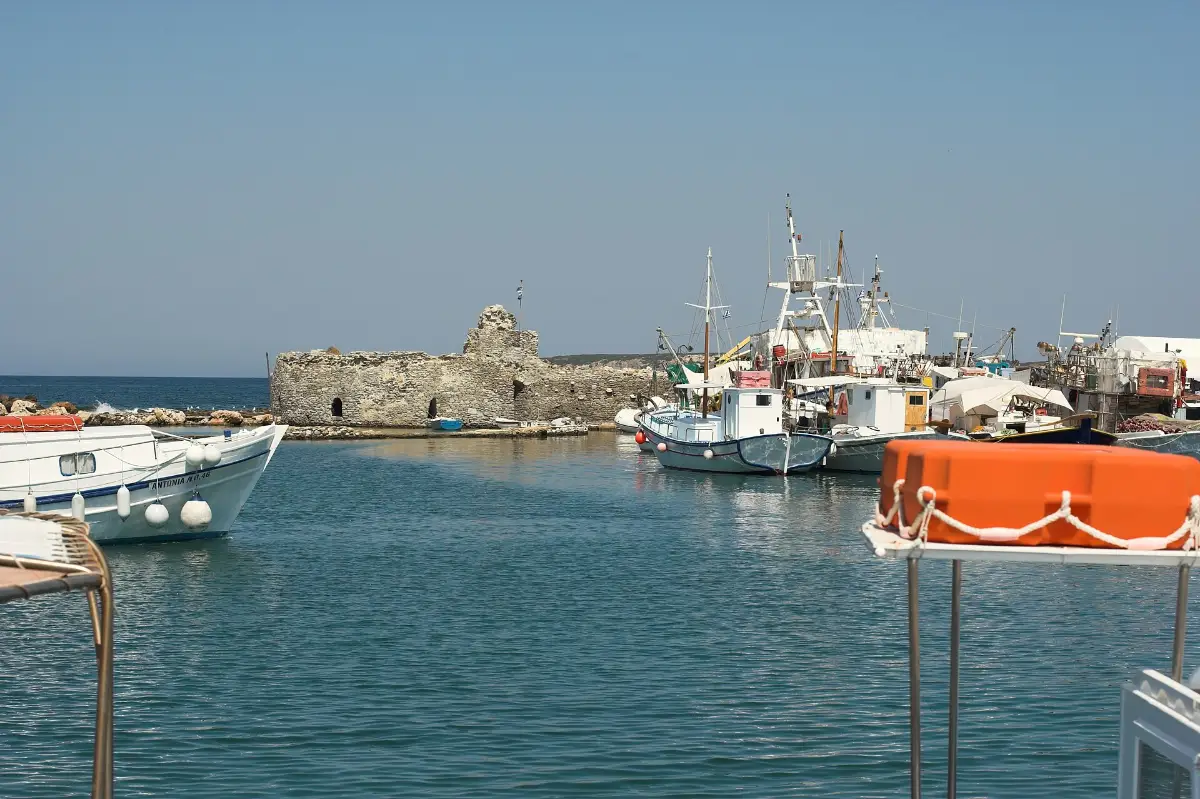
Look at a Cyclades ferry map and Paros sits in the middle of it. That has three consequences for a trip:
- You can get almost anywhere from here without routing back through Athens - Naxos is a short hop, Mykonos and Santorini are both direct, and the smaller islands are reachable.
- A cancelled boat is recoverable. On a thinly-served island, a cancellation can strand you for a day. On Paros there is usually another way off.
- It costs less than the islands either side of it. Paros is a genuine Cycladic island - white villages, good beaches, a real town - without Mykonos or Santorini pricing.
That combination is why we keep pointing first-time island-hoppers here. If you want the reasoning against the alternatives, Naxos vs Paros and Santorini vs Paros both make the case in detail.
Fast boat or conventional
The usual trade, and on this route the gap is wide enough to matter:
High-speed does it in under three hours. Enclosed, pricier, stood down first when the meltemi blows.
Conventional - the Blue Star boats are the ones you will see most - takes around four hours. Slower, cheaper, steadier, open decks, carries cars. On a crossing this length the open deck is a genuine pleasure rather than an endurance test, and the price gap is real.
For a mid-length crossing like this one, the conventional boat is often the better buy rather than merely the cheaper one. You are trading about ninety minutes for a calmer, cheaper journey you can walk around on.
Which port
Mostly Piraeus, with some Rafina sailings seasonally.
If you are coming from Athens airport, check whether a Rafina departure exists on your dates - Rafina is about 25 km from the airport with no city crossing, against a full transit of Athens to reach Piraeus. If you are staying in the city, Piraeus is the end of a metro line and the obvious choice.
Piraeus is large, with numbered gates E1 to E12 along a long waterfront. Find your gate before you find your taxi. Full detail in the Greek island ferries guide.
Arriving at Parikia
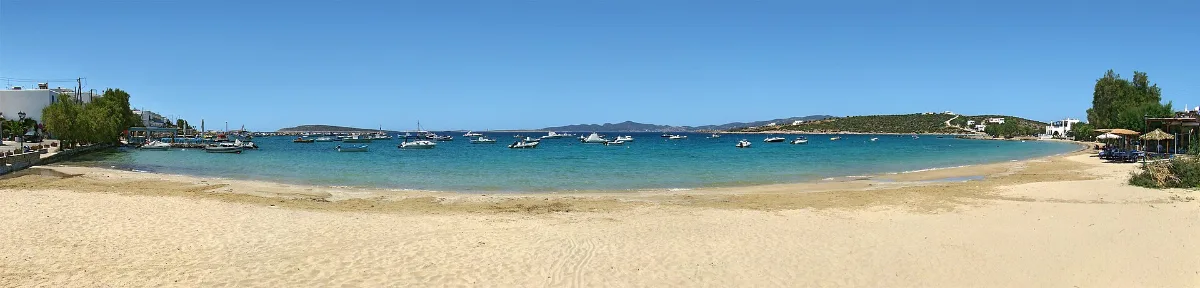
Ferries dock at Parikia, the main town, and this is one of the easier arrivals in the Cyclades - the port is in the town rather than at the bottom of a cliff or several kilometres out. You can walk off the boat and into a street.
Buses meet the boats for Naoussa, the prettier harbour town on the north coast, and the beaches. The island is small enough that no part of it is a long way from the port, which is another reason it works as a base.
Flying, and when it makes sense
Paros airport is PAS, about 40 to 45 minutes from Athens. It is a small airport with a limited schedule, and route networks change season to season.
Flying makes sense for a short single-island trip, or late in the season when sailings thin. For anything involving more than one island, the ferry is not just cheaper but structurally better - you will be taking boats anyway, and starting on one puts you in the rhythm of the trip.
As part of a route
Paros is the natural first or second stop on a Cyclades run. From here:
- Naxos is the short hop across the channel, and the two make an easy pair.
- Santorini is the usual southern finish.
- Mykonos is north.
The sequencing rule: order stops so every boat moves you forward, and fly home from the far end rather than sailing back up the chain. See the island hopping guide.

Diagram by Greece Trips. Free to reuse with credit - CC BY 4.0.
Frequently asked questions
How long is the ferry from Athens to Paros?
About 2h40 on the fastest high-speed services, roughly 4h10 on a Blue Star conventional ferry, and up to about 5h10 on the slowest published crossings.
Which Athens port do Paros ferries leave from?
Mainly Piraeus. Some sailings use Rafina seasonally, which is much closer to Athens airport. Check which port your ticket names before you set out - they are on opposite sides of the city.
Is there an airport on Paros?
Yes, PAS, roughly 40 to 45 minutes from Athens. It is small with a limited schedule, so check what is flying on your dates.
Is Paros a good base for island hopping?
It is the best one in the Cyclades. Paros sits at the centre of the ferry network, so you can reach most of the group directly, and a cancelled boat rarely strands you the way it can on a thinly-served island.
Where do ferries arrive on Paros?
At Parikia, the main town. The port is in the town itself, so you can walk off the boat into a street - easier than most Cyclades arrivals. Buses meet the boats for Naoussa and the beaches.
Next
Read the Paros travel guide, compare it with its neighbour in Naxos vs Paros, or plan the wider trip with the island hopping guide.