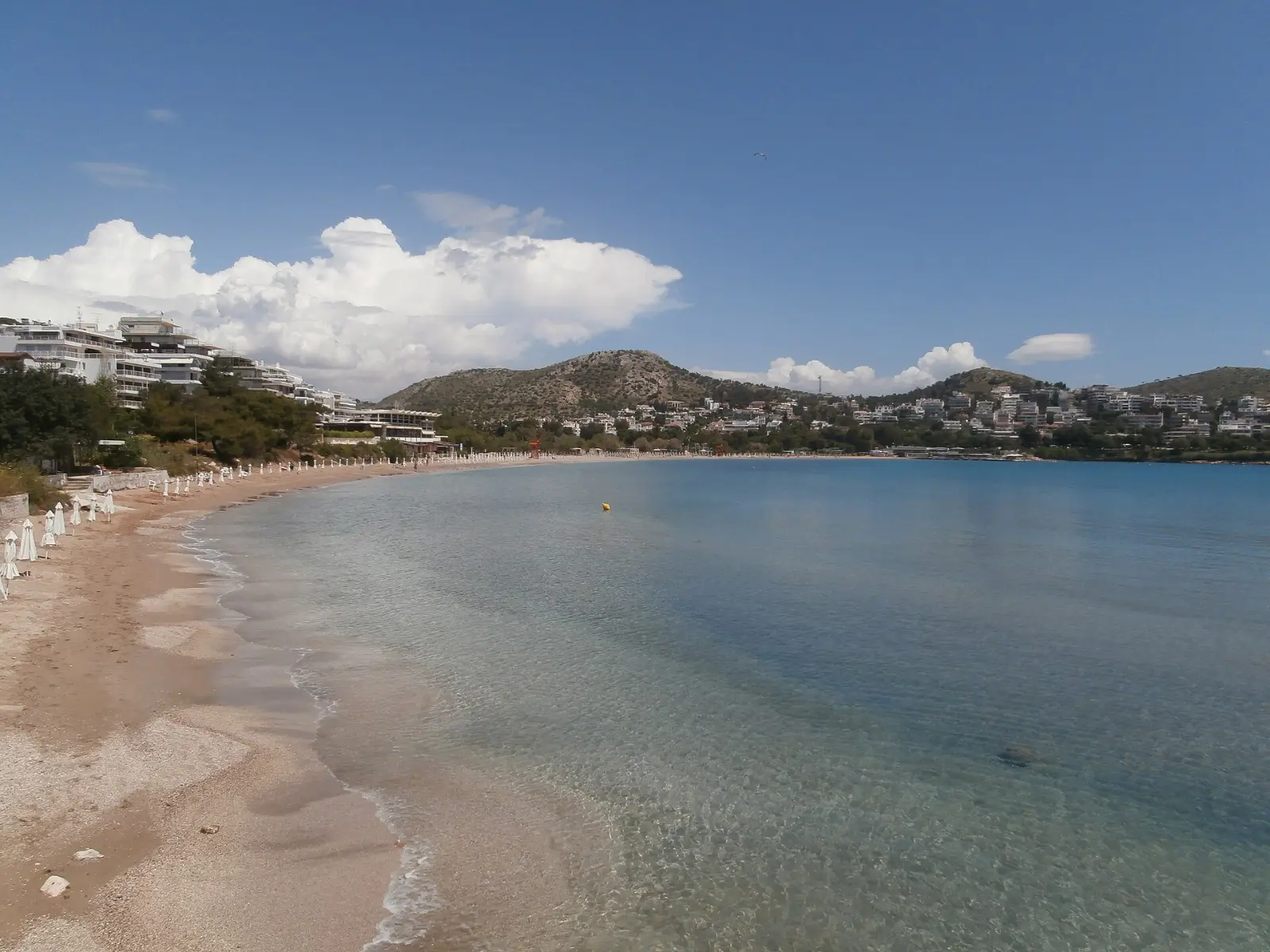
Where it is
a coastal suburb on the Athens Riviera, in the Municipality of Vari-Voula-Vouliagmeni, roughly half an hour south of central Athens by road
Paid beaches nearby
Vouliagmeni, Voula, Asteras (private), Varkiza Resort, Zen
Free beaches nearby
Kavouri, Mikro Kavouri, Limanakia Vouliagmenis, Alkyonides, East Varkiza, and small beaches in Voula
Blue Flag
the municipality states Voula has held one since 2002 and describes Vouliagmeni beach as Blue Flag awarded. Renewed annually
Lake Vouliagmeni
a separate inland brackish thermal lake with its own admission. Water described by the municipality as rich in salts and minerals, ranging 21C to 29C
The caves
the lake opens into a flooded karst cave system. A technical cave-diving environment, not part of the swimming area, and the site of fatalities over several decades. No depth or total printed here
Prices
not printed. Concessions are retendered and repriced; check at the gate
Best timing
weekdays, and early June or September
Travel details last checked July 2026.
There is Vouliagmeni beach itself, an organised pay-beach on the bay. There is Asteras, a private beach next to it charging its own way. And there is Lake Vouliagmeni, which is not on the coast at all: it is an inland brackish thermal lake with its own entrance, its own admission and its own reasons for existing.
Then there is the fourth thing, which is the useful one and which nobody advertises. The Municipality of Vari-Voula-Vouliagmeni publishes a list of its free beaches, and several of them are a short distance from the paid ones.
The organised beaches, and what “organised” means
An organised beach in Greece is a concession: someone runs the strip, charges for entry or for a lounger, and provides facilities in return. It is not a private club, it is not the same as a public beach, and the difference decides your afternoon and your budget.
The municipality lists its paid beaches by name: Vouliagmeni, the big one on the bay, which it calls the most popular beach of the Athenian Riviera; Voula; Asteras, which it describes as the best organised private beach of Attica; Varkiza Resort; and Zen.
What you get on an organised beach here is the standard package: loungers and umbrellas in rows, showers and changing rooms, food and drink on site, water sports at some, courts and a playground at the larger ones. What you are buying, honestly, is not sand. It is infrastructure, shade you do not have to fight for, and somewhere to leave your things while you swim.
We print no admission price for any of them. Beach concessions in Attica are retendered and repriced, day rates differ from lounger rates and from weekend rates, and a figure typed here today is a figure that will be wrong for somebody in a month. Check at the gate or on the operator’s own channel.
Two of the beaches carry Blue Flag status, and the municipality says so on its own pages: Voula has held one since 2002, and it describes the main Vouliagmeni beach as Blue Flag awarded. The award is renewed annually against criteria on water quality, management and facilities, so it is a status held this season rather than a permanent property of the sand. It is also an award and not a verdict on any particular swim: we are reporting who holds it, not issuing a judgment of our own about the water.
The free coast the municipality publishes itself
This is the part that changes how you use the Athens Riviera.
The same municipal site that lists the paid beaches lists free ones alongside them, by name: Kavouri, Mikro Kavouri, Limanakia Vouliagmenis, Alkyonides, East Varkiza, and small beaches in Voula.
So the choice on this coast is not between an expensive beach and a long journey. It is between a strip with a lounger on it and a strip a few minutes away without one, in the same water, published by the same authority.
Kavouri and Mikro Kavouri sit on the peninsula just north of Vouliagmeni bay and are the ones most Athenians name first. Limanakia is a different proposition entirely: a series of small rocky inlets along the coast road, reached by scrambling down from the roadside, with no facilities of any kind and a long-standing local following. It is a swimming spot rather than a beach, and it is a rock-and-cliff environment. What a particular person can manage on that ground on a particular day is not a judgment this page is in a position to issue.
The practical consequence is simple. If you are on the Riviera for one long afternoon with children and bags, take an organised beach and pay for the infrastructure. If you are there to swim for two hours, the free list is right there and the water is the same water.
Lake Vouliagmeni is not a beach
The most common mistake on this coast is treating the lake as one of the beaches. It is not on the sea, it does not behave like the sea, and it is sold separately.
Lake Vouliagmeni is an inland brackish lake fed by thermal springs, sitting below a rock face a short distance from the bay. The municipality describes its thermal water as rich in salts and minerals, and gives a temperature range from 21C to 29C. That range is the whole appeal: the lake is warm when the sea is not, which is why it has a season that runs longer than a beach season and why people go there in months when nobody is swimming off Kavouri.
It operates as a paid facility with loungers, showers, a restaurant and spa services. That is the operator’s own description of what it sells, and it is the version of the lake a visitor meets.
Now the part the marketing does not carry, and it is the reason this page separates the lake from the beaches so firmly.
The lake bed is not a bowl. It opens into a flooded karst cave system running back under the rock, and that system has been the subject of technical exploration by speleological divers since at least the late 1980s. Divers have died in it, over several decades, including a fatality reported in 2026.
We print no depth figure, no passage length and no death toll, because none of those is published by an authority we could read and because a depth on a page like this reads as an invitation. What matters to a visitor is the category distinction: what is sold at the lake is a swim in open water, and the cave system beneath it is a technical cave-diving environment that has killed experienced people. Those are two different activities in the same place, and this page certifies neither of them.
If you are going for the warm water, go for the warm water. It is a genuinely unusual thing to have half an hour from a European capital.
Getting there, and when to go
Vouliagmeni sits on the coast road running south from Athens, and the coast road is the whole journey: the Riviera is a single strip and every one of these beaches is on it.
There are public services along that road and there are taxis, and we name no route and quote no fare, because those change and the operators publish them. Getting around Greece sets out how the pieces fit. If you are driving, the thing to know is that parking near the popular beaches on a July weekend is the constraint on your day rather than the beach itself.
On timing, the mechanism beats the calendar. This coast is where Athens goes at the weekend, so a Saturday in July at Vouliagmeni is an Athens crowd plus a visitor crowd on the same sand. A weekday is a different beach. Early June and September give you the same water with a fraction of the people and, at the lake, a temperature difference that barely registers.
Late season is where this stretch earns its keep. The sea off Attica stays swimmable well past the point at which the guidebooks stop talking about beaches, and what the sea is actually like is the honest version. The best time to visit Greece and the weather month by month both cover the shoulder seasons properly.
Every beach here is booked, or not booked, on its own terms: some organised beaches take lounger reservations and some do not, and the lake is entered at its own gate. We sell nothing and take no commission on this page. What a trip to Greece costs overall is in the trip cost guide.
Which one you actually want
Four different afternoons, and the choice is not about quality.
Take the organised Vouliagmeni beach if you are staying put for a day, want a lounger, food and a shower, and are travelling with people who need somewhere to put things down. Athens with children covers the wider logistics.
Take Asteras if the point is the setting and the service and you know what you are paying for.
Take a municipal free beach, from the list the municipality itself publishes, if you want to swim for two hours and go back into town. This is the choice most visitors do not know they have.
Take Lake Vouliagmeni if the warm mineral water is the attraction, if it is May or October, or if somebody in the group would rather float than swim. Go for that, not because you think it is one of the beaches.
And if none of it appeals, the Riviera is not the only coast in reach of the city. The rest of Athens puts the beaches in the context of everything else the city has, which is a great deal.
Last checked July 2026. What we re-read before every update: the Municipality of Vari-Voula-Vouliagmeni’s own lists of paid and free beaches and its Blue Flag statements, and the lake operator’s own description of what it sells. How we date and check facts is set out in our editorial policy.
Common questions
Is Vouliagmeni beach free?
The main Vouliagmeni beach is an organised beach and charges. So do Voula, Asteras, Varkiza Resort and Zen, which the municipality lists as its paid beaches. But the same municipality publishes a list of free beaches in the same area, including Kavouri, Mikro Kavouri, Limanakia Vouliagmenis, Alkyonides and East Varkiza. The free coast is a short distance from the paid one and is in the same water.
What is the difference between Vouliagmeni beach and Lake Vouliagmeni?
They are two separate places with separate entrances and separate admission. Vouliagmeni beach is on the sea, in the bay. Lake Vouliagmeni is inland, a brackish lake fed by thermal springs beneath a rock face, which the municipality describes as rich in salts and minerals and gives as ranging from 21C to 29C. Buying a ticket to one does not get you into the other, and people regularly turn up at the wrong gate.
How warm is Lake Vouliagmeni?
The Municipality of Vari-Voula-Vouliagmeni gives a range of 21C to 29C for the lake’s thermal water. That is the reason the lake has a longer season than the beaches around it: it is comfortable in months when the open sea off Attica is not, which is why May and October are when it is at its most useful rather than July.
Can you dive in the caves at Lake Vouliagmeni?
The cave system under the lake is a technical cave-diving environment, not part of what the lake sells to visitors, which is swimming and spa facilities in the open water. Divers have died exploring it over several decades. We print no depth, no passage length and no total, because no authority we could read publishes them, and we make no judgment about the activity in either direction. The two things share a location and nothing else.
Which is the best beach on the Athens Riviera?
The honest answer is that it depends on what you need provided, because these beaches differ by their facilities rather than by their water. The municipality calls Vouliagmeni the most popular beach of the Athenian Riviera and calls Asteras the best organised private beach in Attica, both of which are its own words about its own coast. For a full day with a lounger, take an organised beach. For a swim, take one from the municipality’s free list. Both are on the same stretch.
Do Vouliagmeni and Voula have Blue Flags?
The municipality states that Voula has held a Blue Flag since 2002 and describes the main Vouliagmeni beach as Blue Flag awarded. The award is renewed annually against criteria covering water quality, management and facilities, so it describes a status held for a season rather than a permanent property. Check the current Blue Flag list for the year you are travelling.
How do you get to Vouliagmeni from Athens?
It is on the coast road running south from central Athens, roughly half an hour by road without traffic, and the same road serves every beach on this page. There are public services and taxis along it. We name no route and print no fare: those change and the operators publish them. If you drive in high summer, parking rather than the beach is what will shape your day.
When is the best time to go?
A weekday, and either side of high summer. This coast is where Athens itself goes at the weekend, so a July Saturday puts a city crowd and a visitor crowd on the same sand. Early June and September give you the same sea with far fewer people, and the lake barely notices the difference in the water temperature.
Plan by category
The מטאורה guides
4 guides, each scoped to a decision you actually have to make.
 Attractions
Things to do
See the attractions → Hotels
Where to stay
Compare the areas → Itinerary
Day by day
See the itinerary → Day trips
Day trips
See the day trips →
Booking
We sell nothing and book nothing for you. Every guide on this page tells you how to arrange each piece yourself - which ferry operator, when to book, what to prebook and what to leave loose.