Kastoria occupies a peninsula projecting into a mountain lake in western Macedonia, close to the Albanian border, and it has two things that do not usually go together: an old fur industry and an extraordinary density of Byzantine churches.

Diagram by Greece Trips. Free to reuse with credit - CC BY 4.0.
The churches
More than fifty survive, most of them small, single-aisled and from the tenth to fourteenth centuries, tucked between houses in the old quarters. Several keep substantial frescoes, and a few are among the more important Byzantine paintings in the country.
Panagia Koumbelidiki, with its unusual tall drum, is the emblem; the Taxiarches of the Metropolis is the oldest. Most are locked and are opened by a keyholder, which is the normal arrangement and worth planning around.
The fur
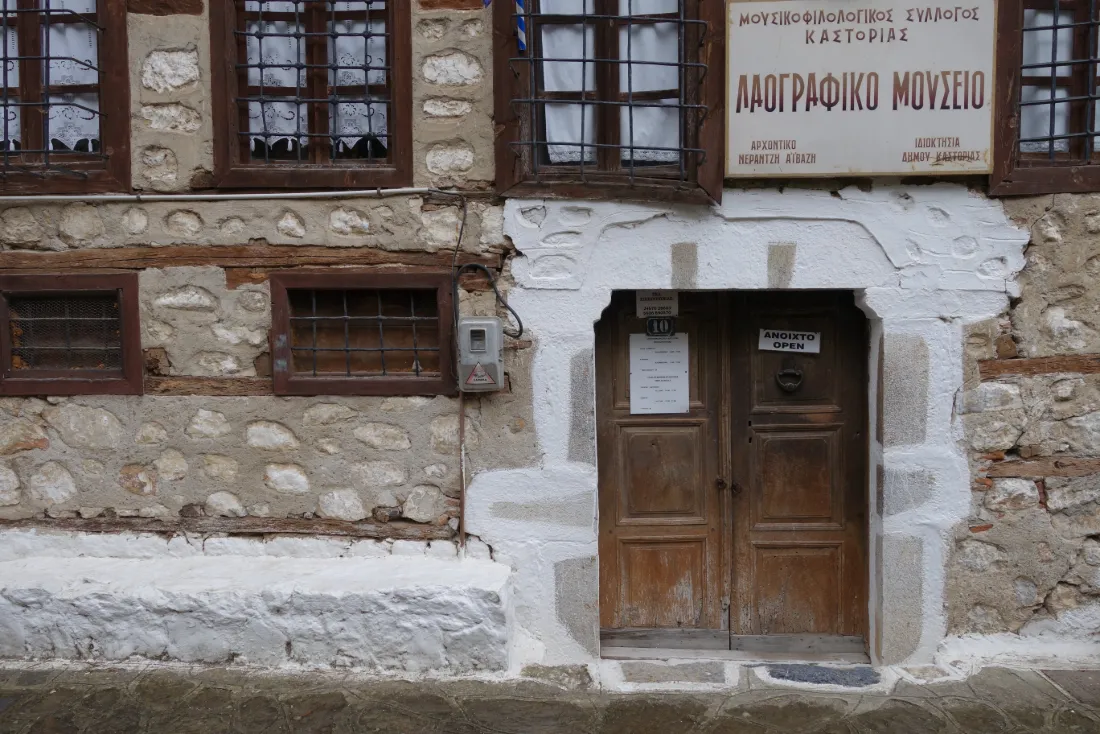
Kastoria has worked fur since the Byzantine period, historically by sewing scraps and offcuts into usable pelts, a skill that made the town a centre of the international trade. The wealth built the archontika, large timber-framed mansions with overhanging upper storeys, several of which are now museums.
The industry is much reduced but still present, and the trade fair still runs.
The lake
Lake Orestiada wraps the town, and a road and path run right around the peninsula, about nine kilometres, past churches, boathouses and reed beds. Pelicans and herons use it. Walking or cycling that loop is the best hour in Kastoria.
At Dispilio, on the southern shore, a prehistoric lake settlement has been excavated and partly reconstructed on stilts over the water, with a museum. One of the finds is a wooden tablet with incised marks that has been argued over for decades.
Getting there and how long
Kastoria has a small airport with domestic flights, and is about two and a half hours from Thessaloniki by road. Florina and the Prespa lakes are north.
Two nights, one of them for the churches with a keyholder arranged.
Last checked August 2026. Church access depends on keyholders - see our editorial policy.
Common questions
Why does Kastoria have so many Byzantine churches?
It was a significant Byzantine town and more than fifty small churches survive from the tenth to fourteenth centuries, several with important frescoes.
Can you get inside the churches?
Most are locked and opened by a keyholder. Arranging access locally is the normal way and worth planning around.
Why is Kastoria associated with fur?
The town has worked fur since the Byzantine period, historically by sewing offcuts into usable pelts, which made it a centre of the international trade.
What is Dispilio?
A prehistoric lake settlement on the southern shore, excavated and partly reconstructed on stilts over the water, with a museum.
Can you walk around the lake at Kastoria?
Yes, a road and path run about nine kilometres around the peninsula past churches, boathouses and reed beds.
Next
Read Florina, Edessa, or Thessaloniki.