The short answer
From Heraklion, the crossing runs roughly 1h35 to 2h30 on the fast boats, with the slowest published services around 4h35. It is served by high-speed craft in season, and by a slower conventional ferry all year.
The important thing about this route is not its length. It is that this crossing exists at all, because it turns a there-and-back Greek trip into a one-way one: you can finish a Cyclades run in Crete, or start in Crete and work north, without sailing back through Athens.
The catch: the fast boats are seasonal, running daily from roughly early April to the end of October. Outside that window a conventional ferry keeps the route open, usually about twice a week. Check your dates before you build a trip on it.
Take it if you want Crete and the Cyclades in one trip without backtracking. Check first if you are travelling in the shoulder season or later.
Crete to Santorini at a glance
Why this route is worth planning around
| Crossing time | ~1h35–2h30 fast; slowest published ~4h35 |
|---|---|
| Leaves from | Heraklion |
| Vessel | High-speed craft in season; a conventional ferry all year |
| Fast boats | Roughly early April to the end of October |
| Off-season | A conventional ferry, usually about twice a week - check the operator |
| Weather risk | Real; high-speed boats stop first |
Most Greek trips are built as a loop out of Athens: sail down the Cyclades, sail back up, fly home. That return leg costs a full day and shows you nothing you have not already seen.
This crossing breaks the loop. Two shapes become possible:
- Cyclades first, Crete last. Athens → Paros or Naxos → Santorini → Crete → fly home from Heraklion or Chania. You end on the biggest, most varied island with a real airport, and you never repeat a leg.
- Crete first, Cyclades after. Fly into Crete, take your time, then hop north to Santorini and work back toward Athens.
Either way you have converted a round trip into a one-way route. That is the single highest-value planning move in Greek island travel, and it is why this short crossing gets its own page. The general method is in the island hopping guide.
The seasonal catch, stated plainly
This is the most season-dependent route on our routes layer, and it is worth being precise rather than reassuring.
The fast boats run daily from roughly early April to the end of October, and the exact dates change every year. Through the summer the service is at its densest. Outside that window the fast boats largely stop, but the route does not: a conventional ferry on the long line from Piraeus through Santorini and Crete to Rhodes calls at both islands all year, usually about twice a week in winter, often overnight, and it takes around 3 to 4.5 hours.
What that means practically: in July, this is a routine hop you can book a few days out. Between November and March, it is a constraint that should shape your whole itinerary, and you should confirm sailings with the operator before booking anything else - the flights home, the Crete accommodation, any of it.
The route does not stop in winter. It gets thin enough that you must check rather than assume.
The vessel, and the weather
In season this route is worked by high-speed craft, which carries the familiar trade-off: quick and enclosed, and the first class of vessel stood down when the wind gets up.
The crossing runs across open water between Crete and the southern Cyclades, with no shelter to duck into. In a strong summer meltemi - hardest in July and August - this is exactly the kind of exposed high-speed run that gets cancelled.
Combine that with the seasonality and the planning rule writes itself: do not make this crossing the day before an international flight. Leave a night of margin on whichever end your flight home is. When a ferry is cancelled covers your options when it happens.
Which end you arrive at
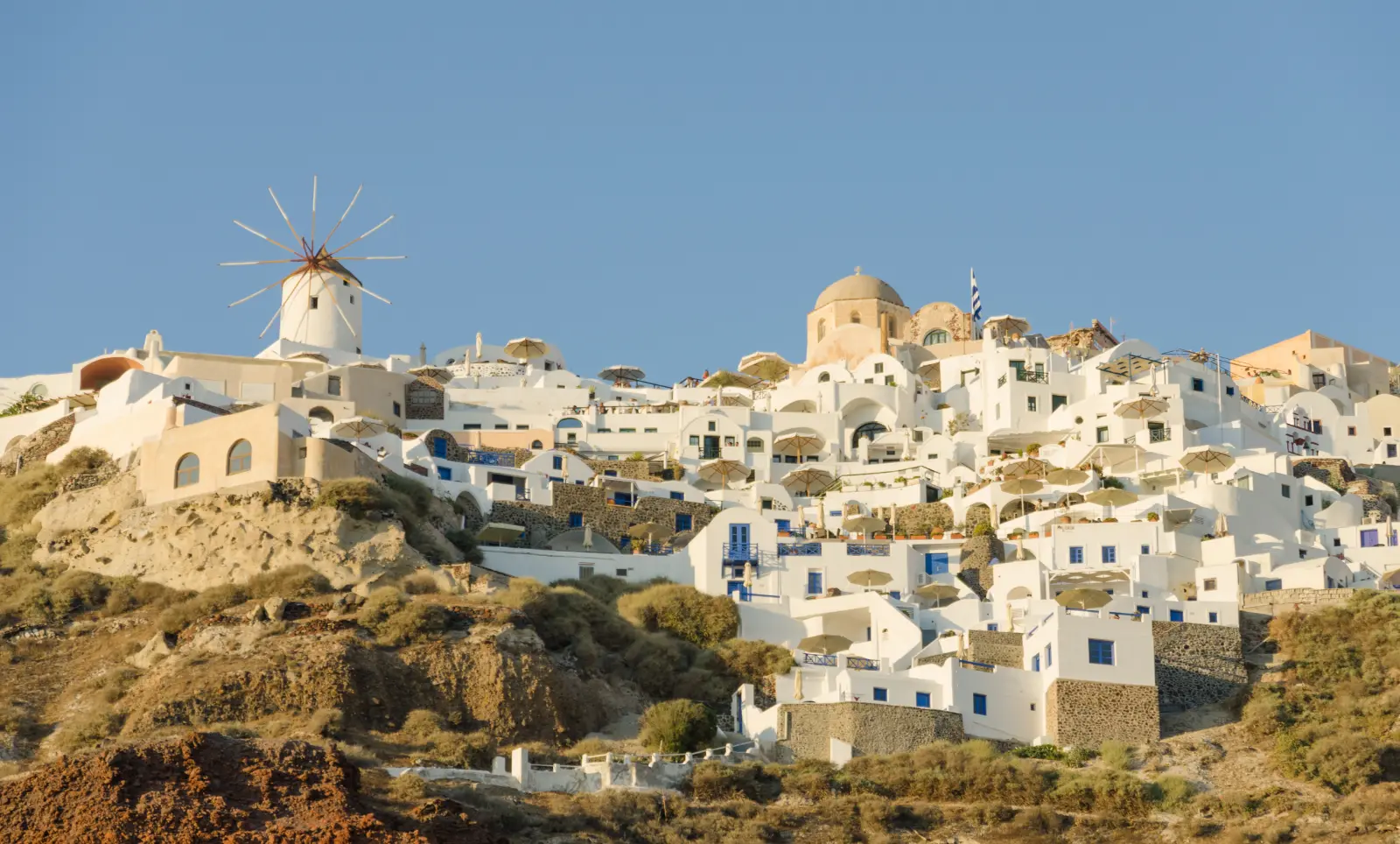
On the Santorini side, ferries dock at Athinios, at the base of the caldera cliff, well below the towns and up a steep switchback road. Have your onward transfer arranged before you sail.
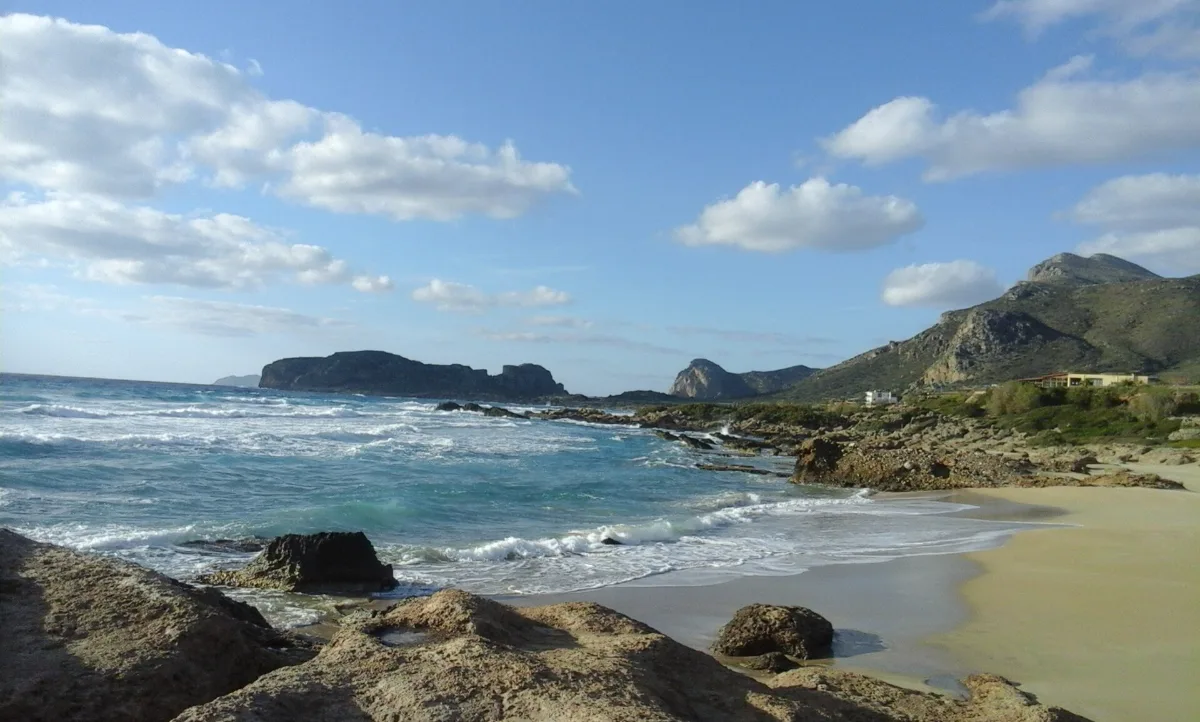
On the Crete side, Heraklion puts you in the centre-east of the island: the airport hub, Knossos, the archaeological museum. If your Crete is the western one - Chania, Balos, Elafonisi - you have a long drive along the north coast after you land, so factor that in when choosing where to stay. The Athens to Crete page covers the Heraklion-or-Chania decision in full.

Diagram by Greece Trips. Free to reuse with credit - CC BY 4.0.
Frequently asked questions
How long is the ferry from Crete to Santorini?
Roughly 1h35 to 2h30 on the fast boats from Heraklion, with the slowest published services around 4h35.
Does the Crete to Santorini ferry run all year?
Yes, but the fast boats do not. They run daily from roughly early April to the end of October, and the exact dates change every year. Outside that window a conventional ferry keeps the route open, usually about twice a week and often overnight. Check the operator for your specific dates before building a trip around it.
Which port does the ferry leave from in Crete?
Heraklion, in the centre-north of the island. If you are based in western Crete around Chania, allow for the drive east along the north coast.
Can I do Crete and Santorini in one trip?
Yes, and this crossing is the reason it works well. Ending a Cyclades run in Crete - or starting in Crete and heading north - means you never sail back the way you came, which saves a full day over a there-and-back loop.
Is the Crete to Santorini crossing rough?
It can be. The route runs across open water with no shelter, in season it is worked by high-speed craft, and those are the first vessels stood down in a strong meltemi. Leave a night of margin before any onward flight.
Where does the ferry arrive in Santorini?
At Athinios, the port at the foot of the caldera cliff. The towns are on the rim above, up a steep switchback road, so arrange your onward transfer before you dock.
Next
Read the Crete travel guide and the Santorini travel guide, settle the choice with Santorini vs Crete, or plan the whole route with the island hopping guide.